Articles / Warning signs
10 Warning Signs Your Identity Has Been Stolen
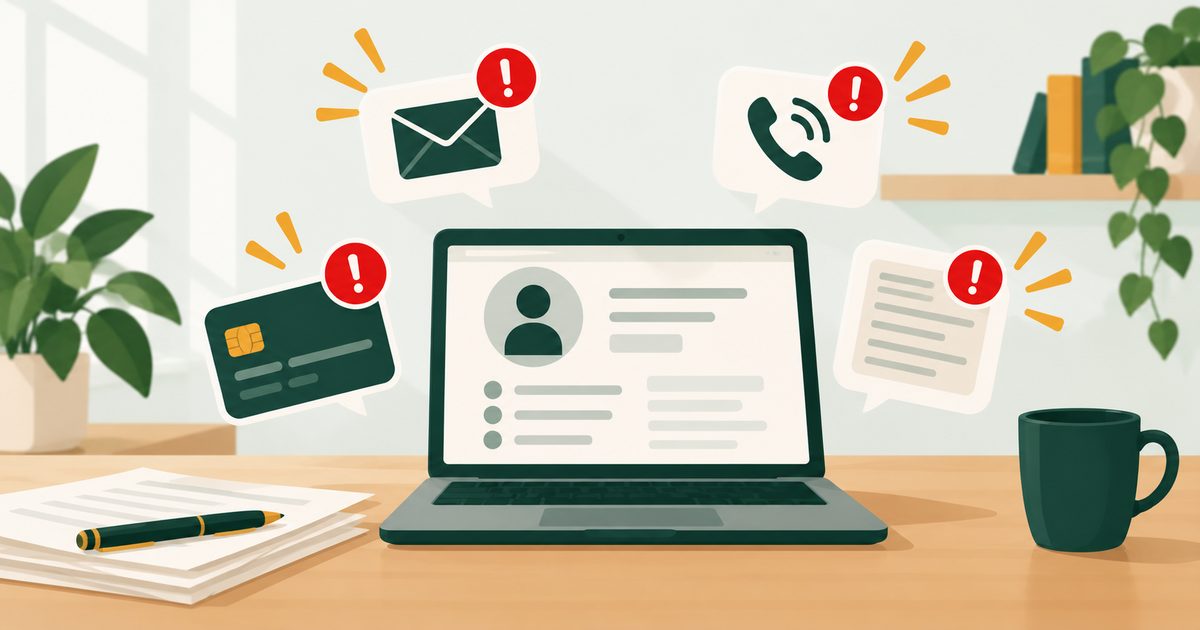
Most identity theft victims don't find out right away. Thieves count on that delay. The longer fraud goes unnoticed, the more accounts they can open and the more damage they can do. Knowing the early warning signs is the single best way to limit the harm.
Here are ten red flags that someone may be using your personal information.
- Charges you don't recognize. Even a small charge of a dollar or two can be a thief testing whether a stolen card works before making larger purchases.
- Bills or mail stop arriving. If your regular statements suddenly disappear, someone may have changed your mailing address to hide their activity.
- Mail for accounts you never opened. Credit card offers are common, but welcome letters, cards, or statements for accounts you didn't open are a serious warning sign.
- Calls from debt collectors about unfamiliar debts. Collectors don't usually call about debts that don't exist. If they're calling, someone may have run up a balance in your name.
- Unexpected hard inquiries on your credit report. A hard inquiry means someone applied for credit. If you didn't apply, find out who did.
- You're denied credit for no clear reason. A sudden denial, or an unusually high interest rate offer, can mean fraudulent accounts have damaged your credit.
- The IRS says you already filed. If your tax return is rejected because one was already filed under your Social Security number, a thief may have claimed your refund.
- Medical bills for care you never received. Medical identity theft can lead to bills, insurance claims, and even incorrect information in your health records.
- Alerts about new logins or password changes. Notifications that you didn't trigger often mean someone has access to your email or financial accounts.
- Your information appears in a data breach notice. A breach letter doesn't mean you've been victimized yet, but it does mean your information is now in criminal hands.
What to do if you spot a warning sign
Don't wait to see if it gets worse. Check your credit reports at AnnualCreditReport.com, contact the company involved, and consider freezing your credit. Acting in the first few days can save months of cleanup later.
Keep reading
-

What to Do in the First 24 Hours After Identity Theft
Fast action stops thieves from opening new accounts. Here are the six steps to take on day one, in order.
-
The Most Common Scams Identity Thieves Use Right Now
Phishing, scam texts, fake government calls, and AI voice clones. How each one works and how to protect yourself.
-
How to Freeze Your Credit (and Why Everyone Should)
A credit freeze is free and stops most new accounts in your name. What it does, how it differs from a fraud alert, and how to set one up.
Fraud Next Steps partners with EverGuard and may be paid when you call or sign up. This article is general information, not legal or financial advice. We are not affiliated with any government agency, bank, or credit bureau.